Creative Spaces: The Atelier in the Reggio Emilia Approach
2026.03.09Learn about the Reggio Emilia Approach for through a Q&A with our Atelierista.
What Is an Atelierista?
In schools inspired by the Reggio Emilia approach, you may hear two words that are less familiar in traditional early childhood settings: atelier and atelierista. The atelier is more than an art room, and the atelierista is more than an art teacher. Together, they represent a philosophy that places creativity, research, and expression at the center of children’s learning.
For families and educators new to the concept, the atelier is not simply a place where children make art. It is a dedicated space where thinking becomes visible—and where children are recognized as capable, expressive, and deeply competent learners.
The following entry includes snippets of a conversation with RST’s Head Atelierista, Ana. Through out the entry, Ana explains her role and practice in her own words. Context is also included to help readers who may be encountering these ideas for the first time.
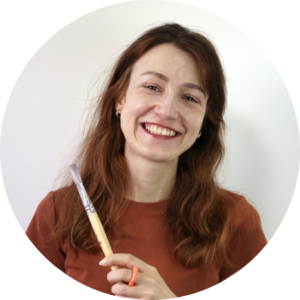
Ana is our Head Atelierista at RST. She manages the atelier space, creates provocations for all of our students, and provides her knowledge of art, materials, and design to all of the RST teachers.
About The Atelierista Role & Philosophy
The atelierista is a trained educator —often with an artistic background—who works alongside children and teachers to deepen learning through materials.
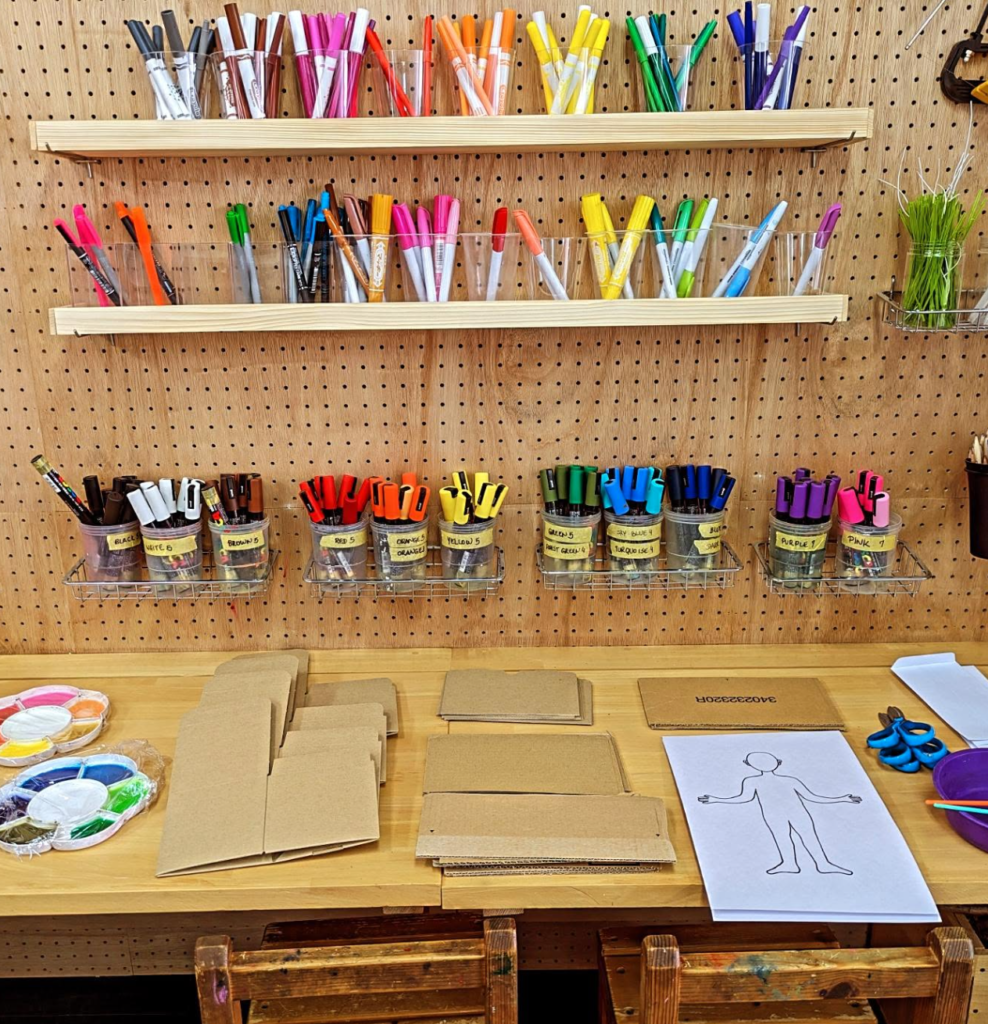
While the atelierista does often spend time in the classroom, the atelierista’s “home base” so to speak at a school is usually a special room called the atelier. Just like a designer or artist’s atelier, the school atelier is a studio or workshop dedicated to working on creative endeavors.
***
How do you describe the role of an atelierista to someone unfamiliar with Reggio?
“An atelierista is someone who helps children think and express their ideas through art and materials, usually in the comfortable space of the Atelier, which functions as an art studio with an art library of materials of sorts.”
What drew you personally to becoming an atelierista?
“As an artist I saw an opportunity in sharing my passion and knowledge outside of the bounds of categorization.”
How does your understanding of ‘the hundred languages of children’ show up in your art classes?
“It shows up in my art classes by recognizing that children don’t express their ideas in just one way and art isn’t about making a product. It’s about the process, the journey there.”
***
Rather than teaching art as a stand-alone subject, the atelierista supports children in using materials as tools for thinking. Many atelieristas come from studio art backgrounds and are drawn to education as a space where disciplines overlap rather than remain separate.
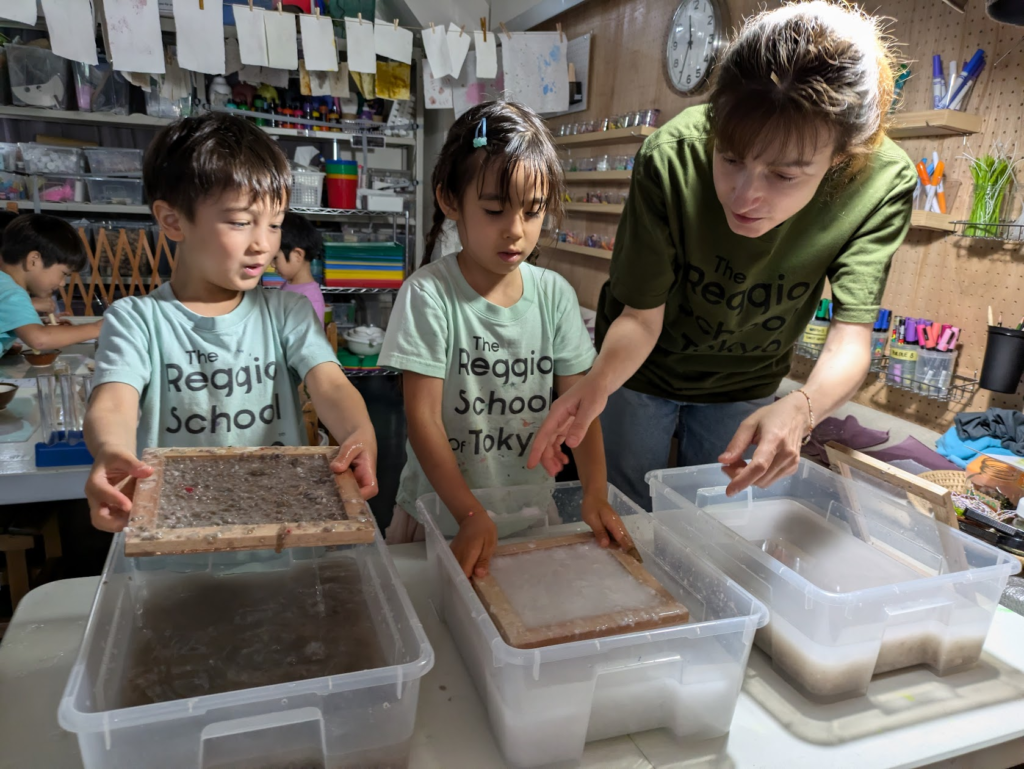
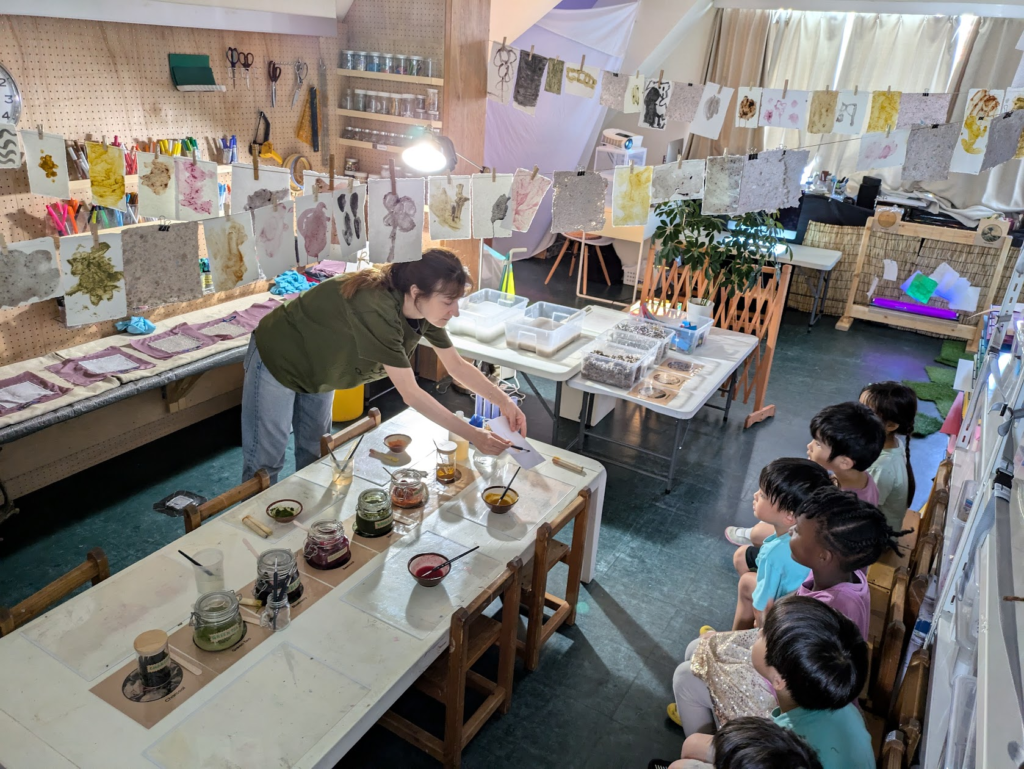
With a professional background in art, atelieristas can give children deeper, more meaningful experiences. Here we can see Ana using her background knowledge of paper and print making to create paper.
About the Atelier in General
The atelier environment itself plays an important educational role. Its design reflects respect for children and for materials. The materials in our atelier are filled with a variety of things: fabrics, wires, buttons, paints, brushes, recycled materials and art books. While the materials comes from a variety of sources and places, they are all vetted by the Atelierista before going into use by the children and staff. This ensures a quality for the materials and experiences the community has.
***
How is the atelier designed to invite curiosity and experimentation?
“It is organized neatly, like a library, where every material has its own home. They are not hidden away, but rather visible, so they can immediately inspire upon looking around. On top of that, the Atelier uses warm colors, wood and softer lighting to create a feeling of safety and coziness. Everyone is and should feel invited.”
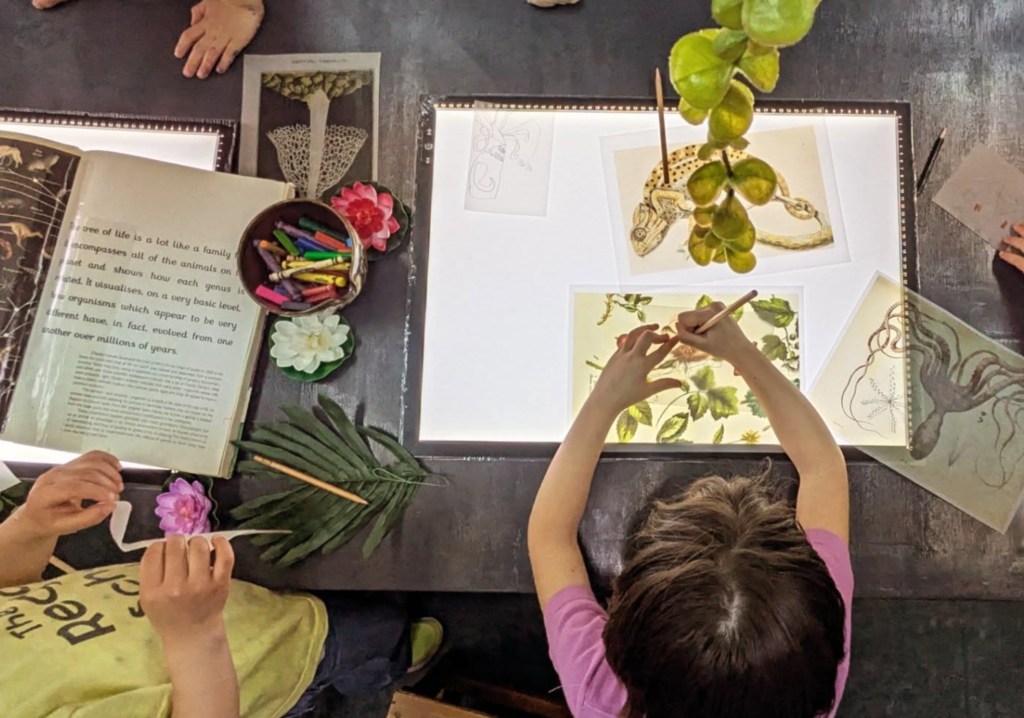
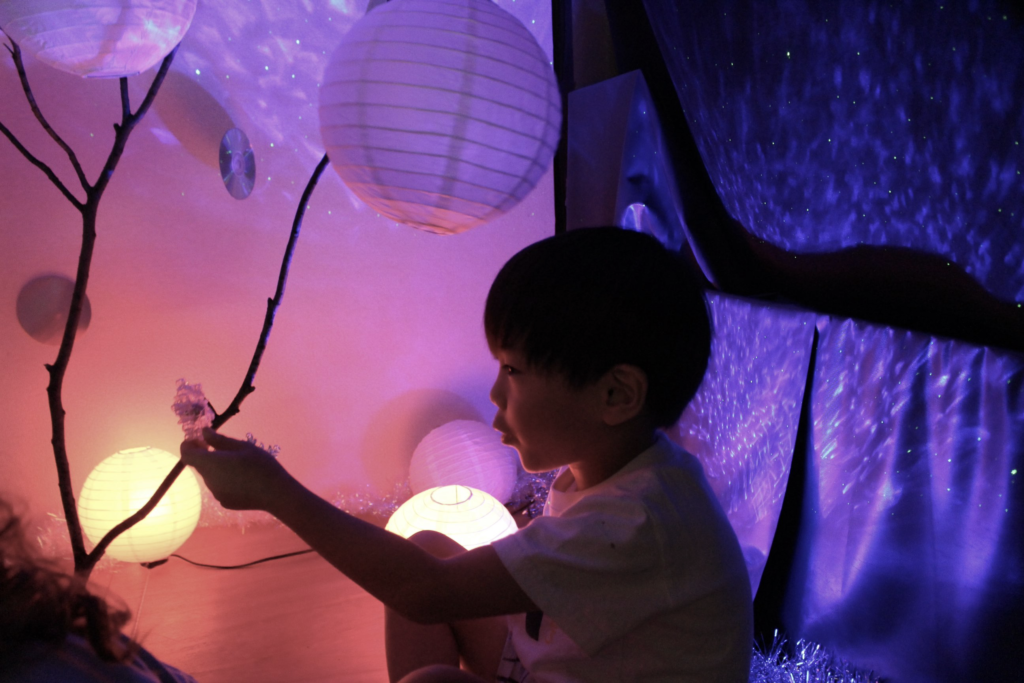
In this setting, materials are intentionally displayed to encourage independent exploration.
Are there materials you find especially powerful for provoking learning—and why?
“I have come to discover that anything three-dimensional tends to foster more curiosity and hold children’s attention longer than two-dimensional art practices. When children can physically move around a piece, look at it from different angles, and manipulate materials with their hands, their engagement deepens. They aren’t just representing an idea; they are building it.”
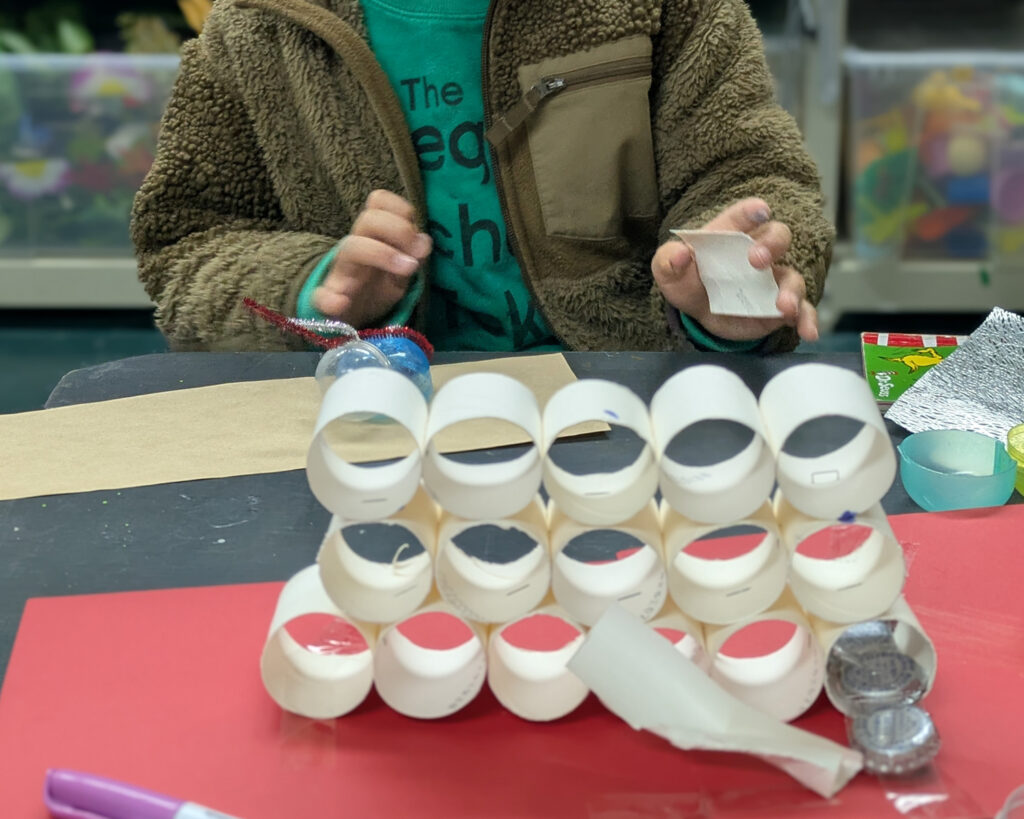
Three-dimensional work invites spatial reasoning, collaboration, and sustained investigation.
How do you decide when to introduce a new material or technique?
“I like to build suspense and excitement. I’ll often say that I have something new I’d love for us to try together later, not something for them to do on their own, but something we’ll explore side by side. That sense of shared discovery makes it feel safe and inviting. I also leave room for negotiation. Some children prefer to stick with what feels familiar. In those moments, I introduce new materials alongside their favorite ones. This way, it doesn’t feel like a requirement or a replacement. There’s no pressure, just an invitation. Often by watching others (and me) explore, their curiosity grows and they decide to give it a try.”
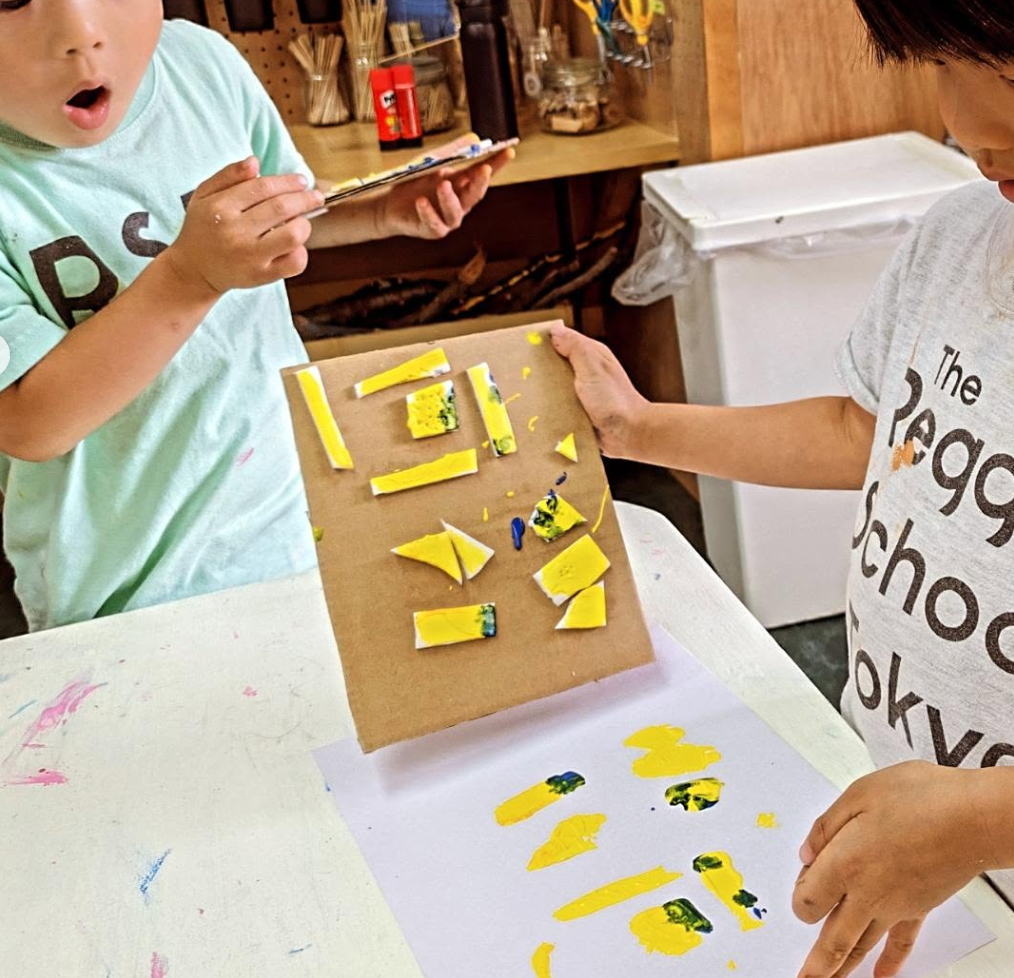
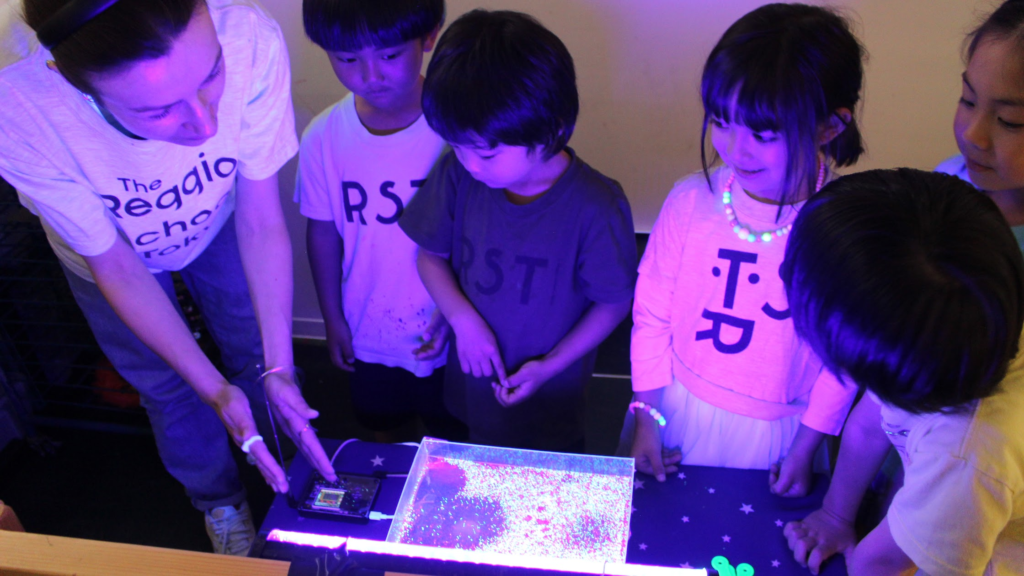
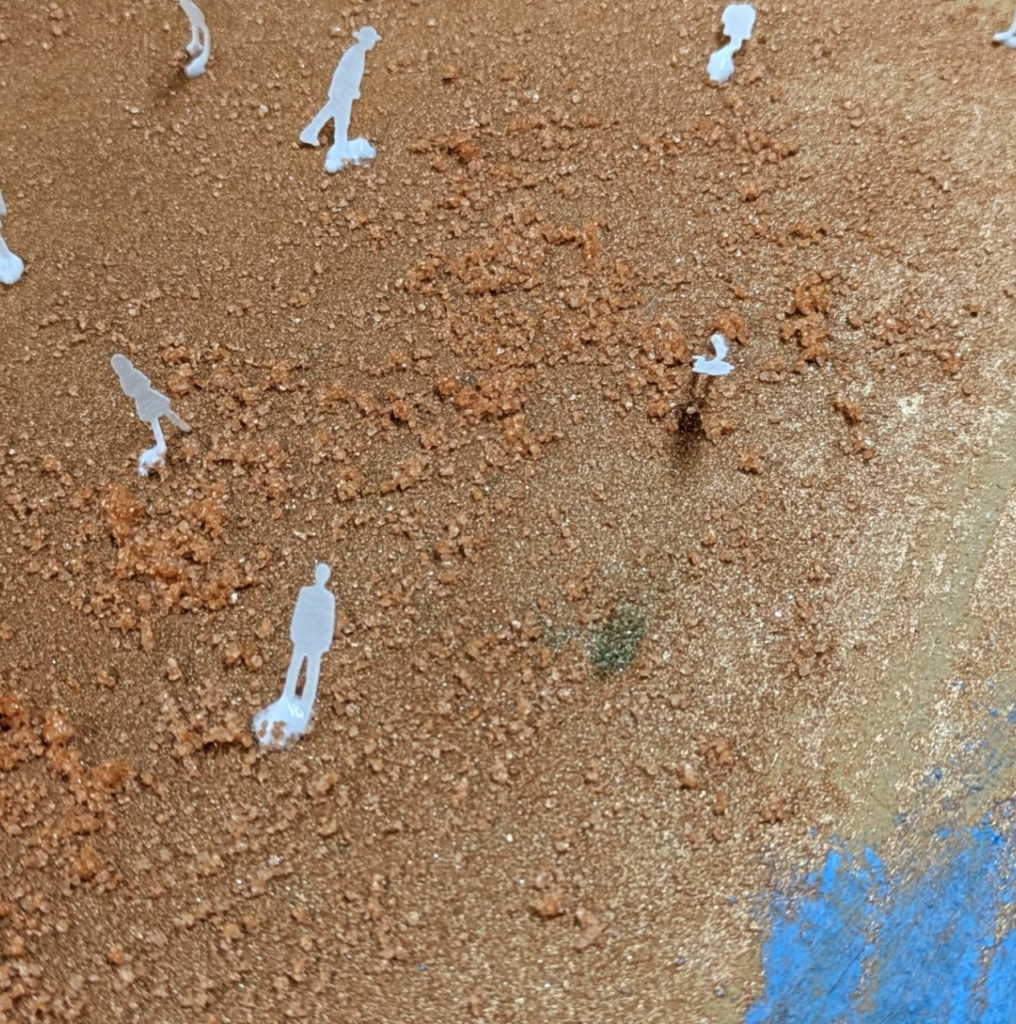
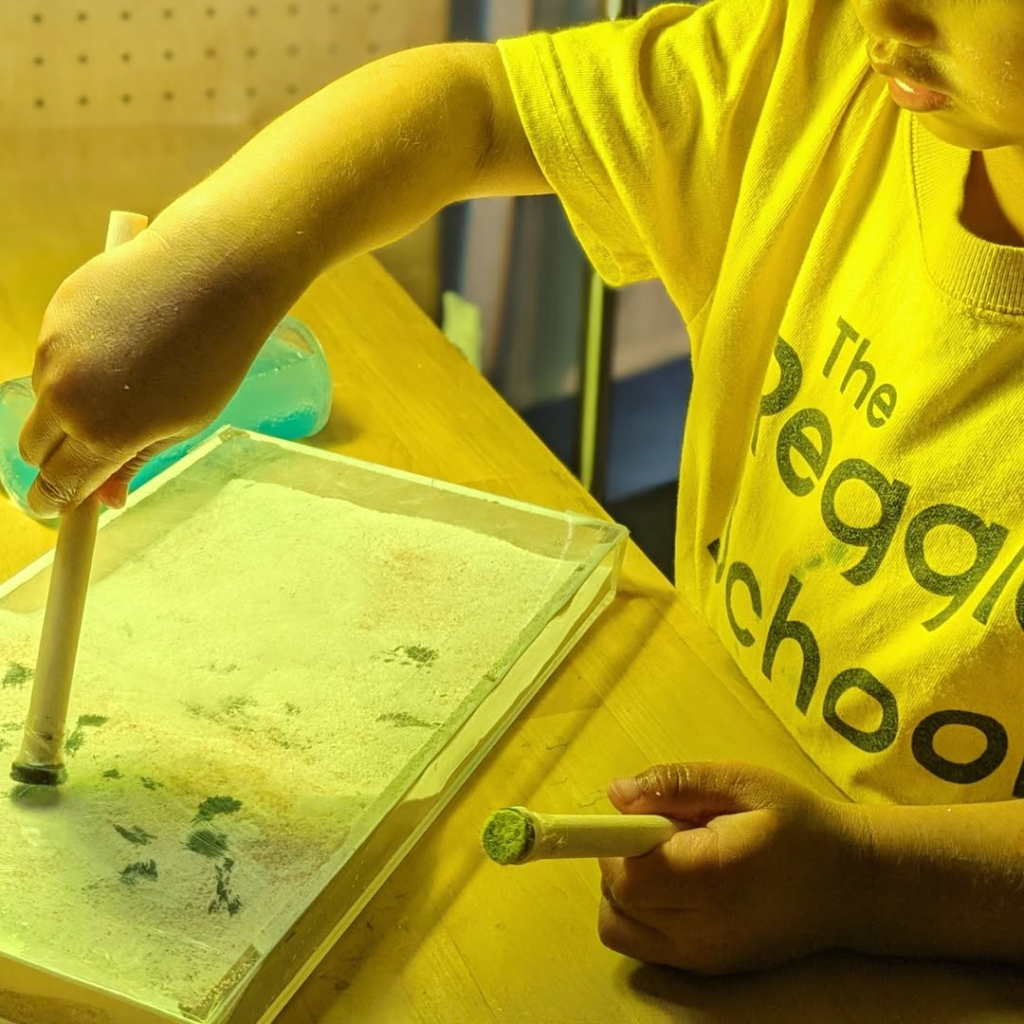
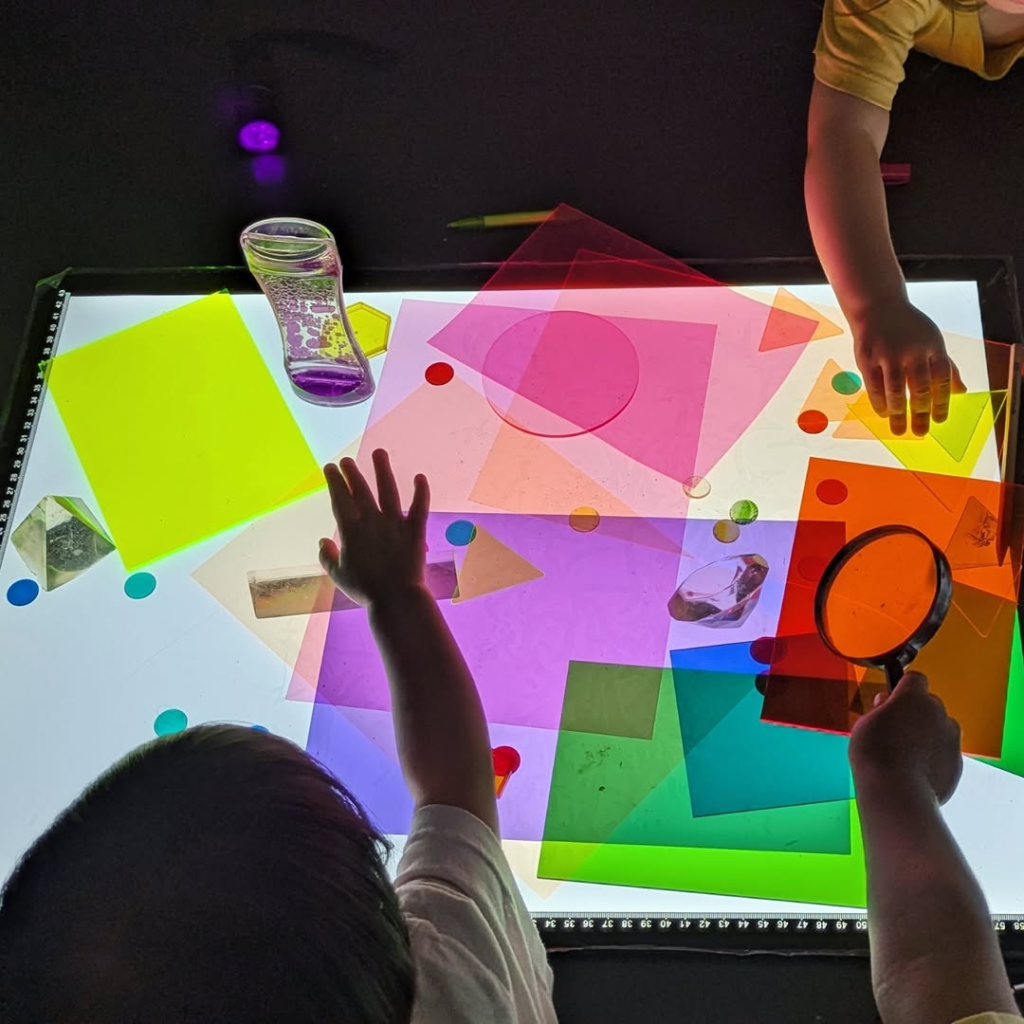
While some materials may seem simple, ideas which the atelierista and children come up with can create unique experiences through everyday items. Scraps of cardboard can be stamps, and with a UV light, sand, beads, and recycled toys can glow with new perspective.
About Atelier Club Classes
Atelier Club is a special program run at RST. In the Atelier Club, the atelierista provides extended time for open-ended exploration using the atelier and its resources freely. The program runs in small groups almost every day of the week, and is one of the most popular programs in the school. Part social learning experience, part creative home for children, it is anything other than a paint-by-numbers art lesson.
***
How does Atelier Club differ from traditional art instruction?
“It is open-ended and does not require finished products. It focuses on exploration and possibilities of art materials.”
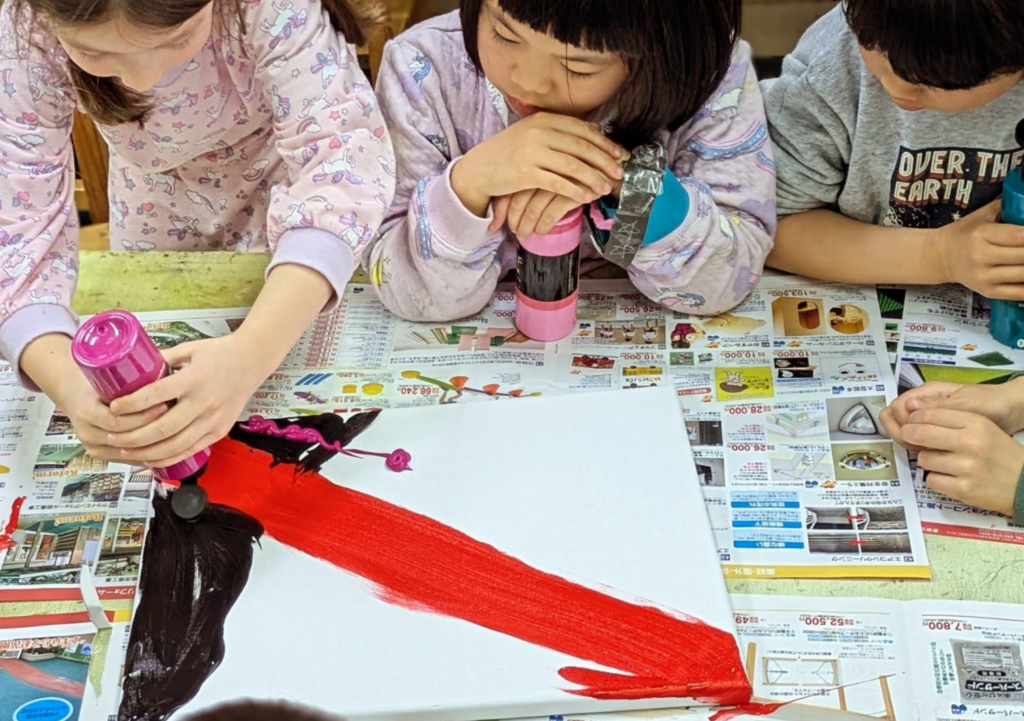
The emphasis shifts from outcomes to inquiry in the Atelier. Children learn to create their own meaningful experiences and challenges.
What are some things you set out to do in the Atelier Club class?
“Learn through fun, discover through creating, think through making.”
How do you balance skill-building with open-ended exploration?
“I step in and offer help when needed. When a child asks for help, I first explain the task and encourage them to try on their own. If it’s still too challenging, we work through it together. Our focus is on developing motor and logical thinking skills, rather than artistic ability.”
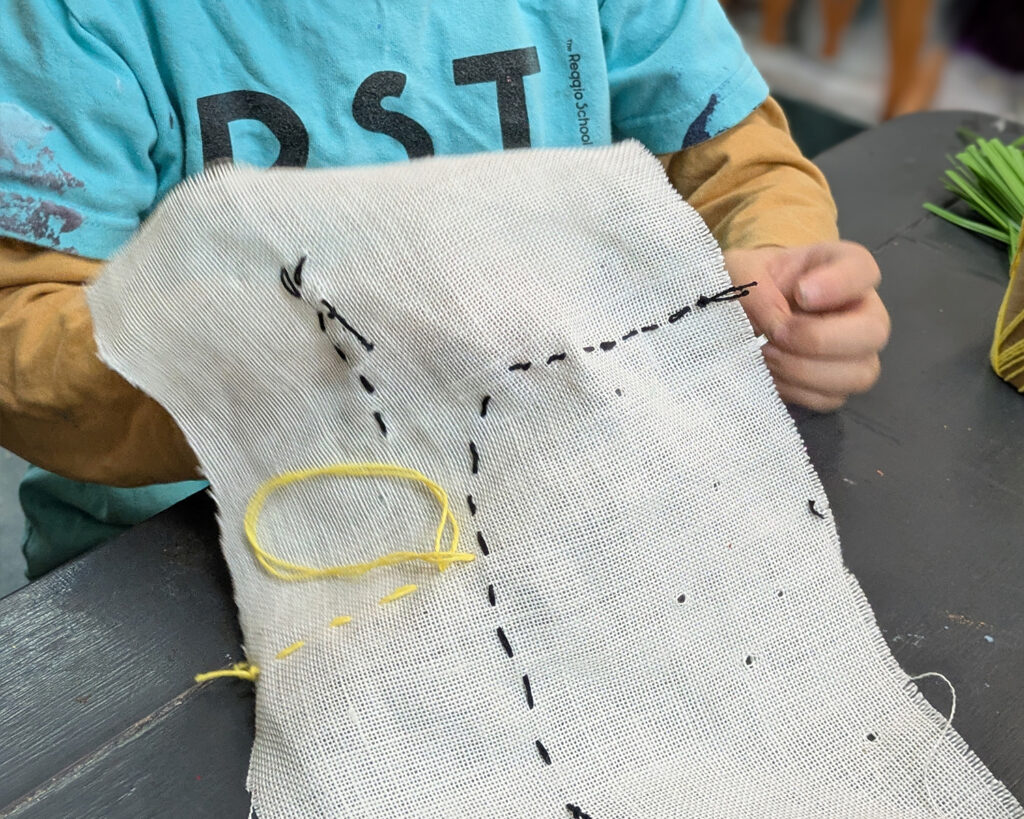
By not intentionally filling up the classroom time with plans from the teacher, children learn to challenge themselves to learn new skills from their own ideas.
Can you share an example of a project that evolved in an unexpected direction?
“Last year, for the duration of almost one term, the children made a structure that they called ‘The Oak House’. What started as a one class only activity turned into a collaborative project for the children of Atelier Club. This house went through many transformations and took up half of the studio by it’s completion.”
In what ways do children influence the direction of Atelier Club?
“It’s very clear when they bring new knowledge or excitement from that day’s center into the Atelier Club. We talk about it together and decide how we can incorporate it into our art projects. We also share ideas as a group and vote on what we’d like to create or explore next.”
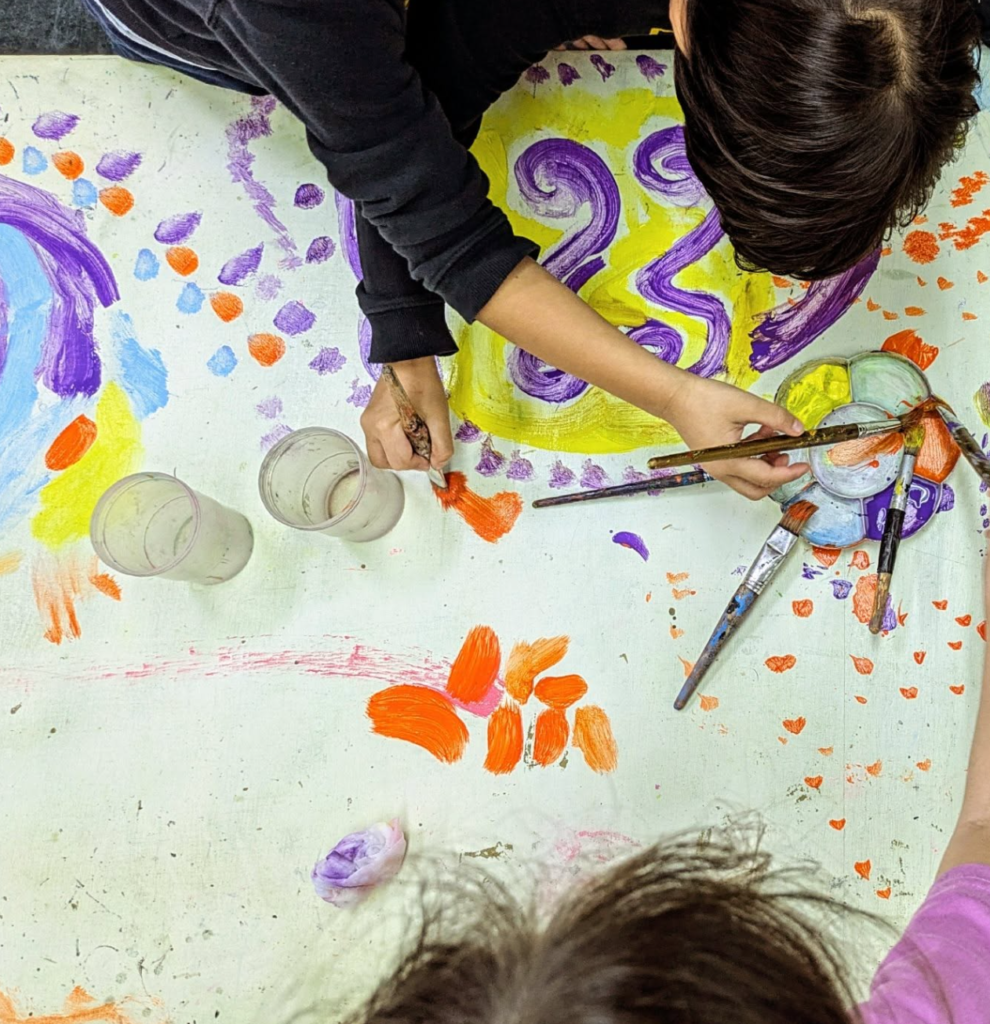
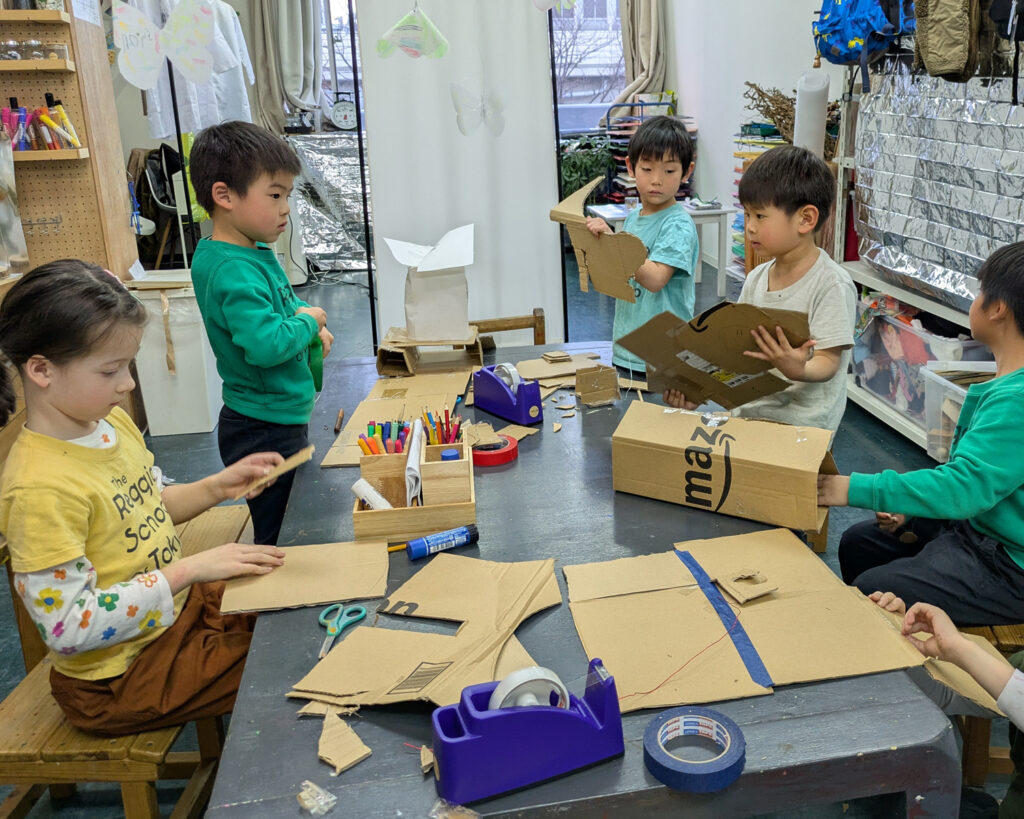
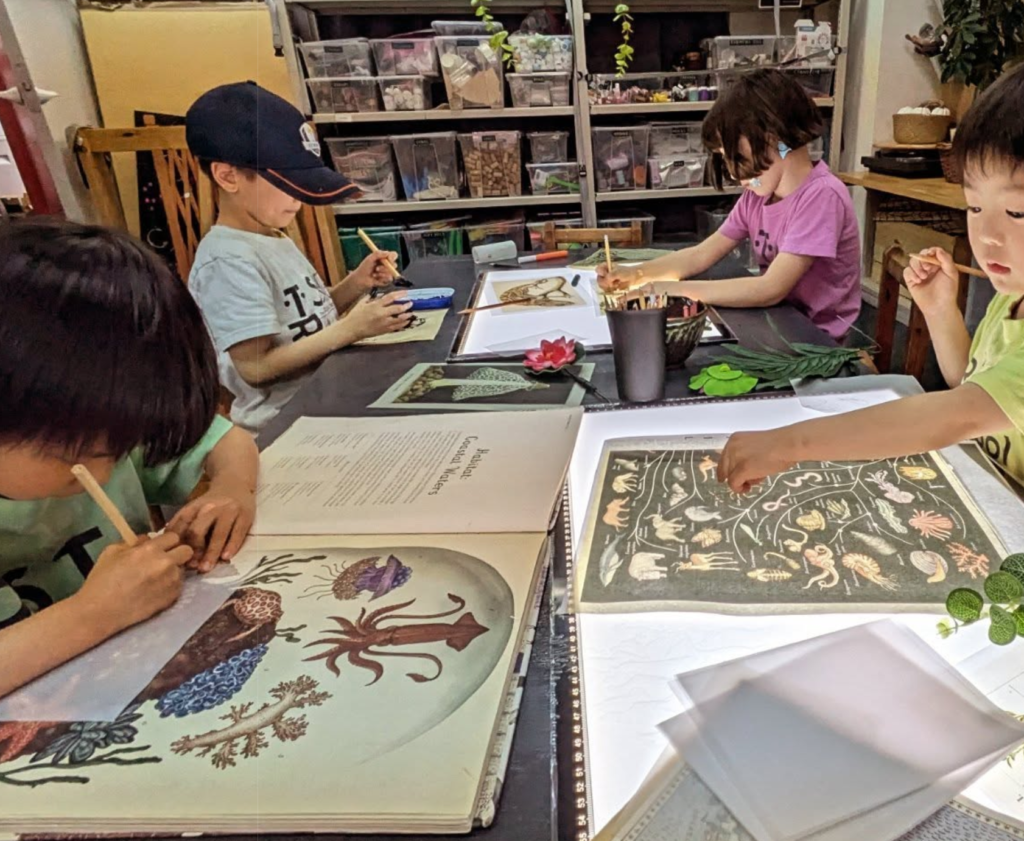
A key part of the Atelier Club is the social aspect of creating together in a group. Children learn together by copying, emulating, sharing, and discussing.
How do families become part of the learning process through the atelier?
“Every parent is updated on what we did and talked about at the end of every day. In addition, I have implemented and open pickup time where parents can join their children in finishing up their projects and clean up time before leaving.”
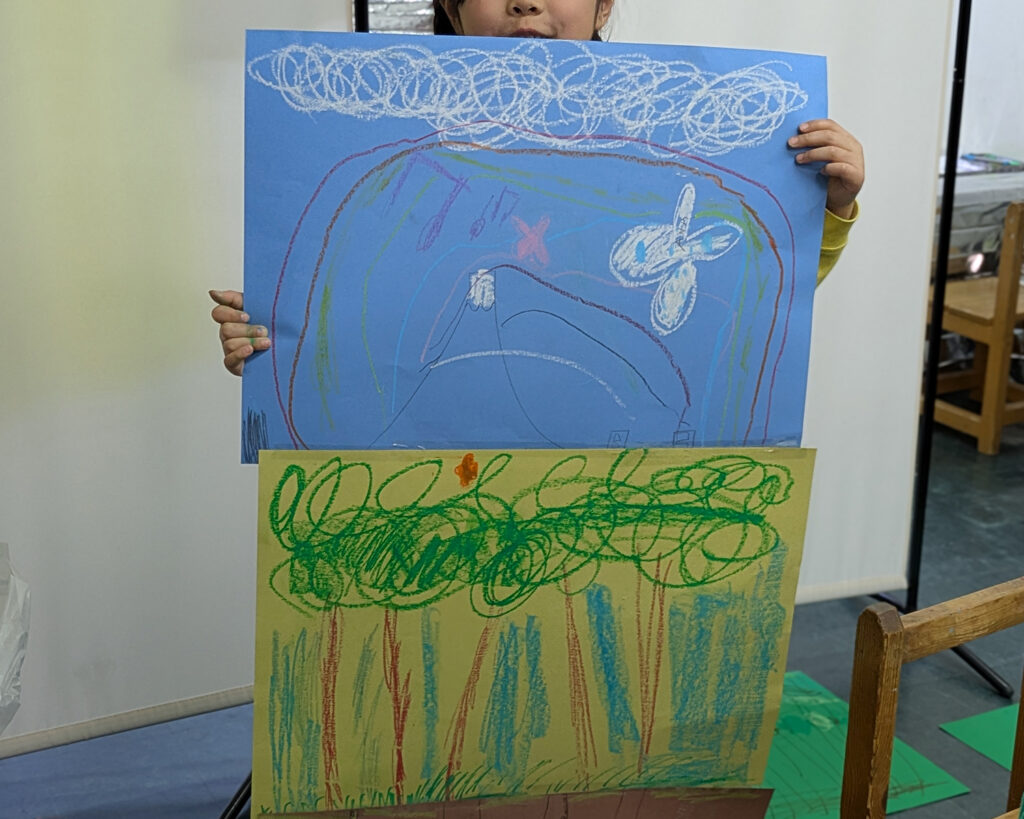
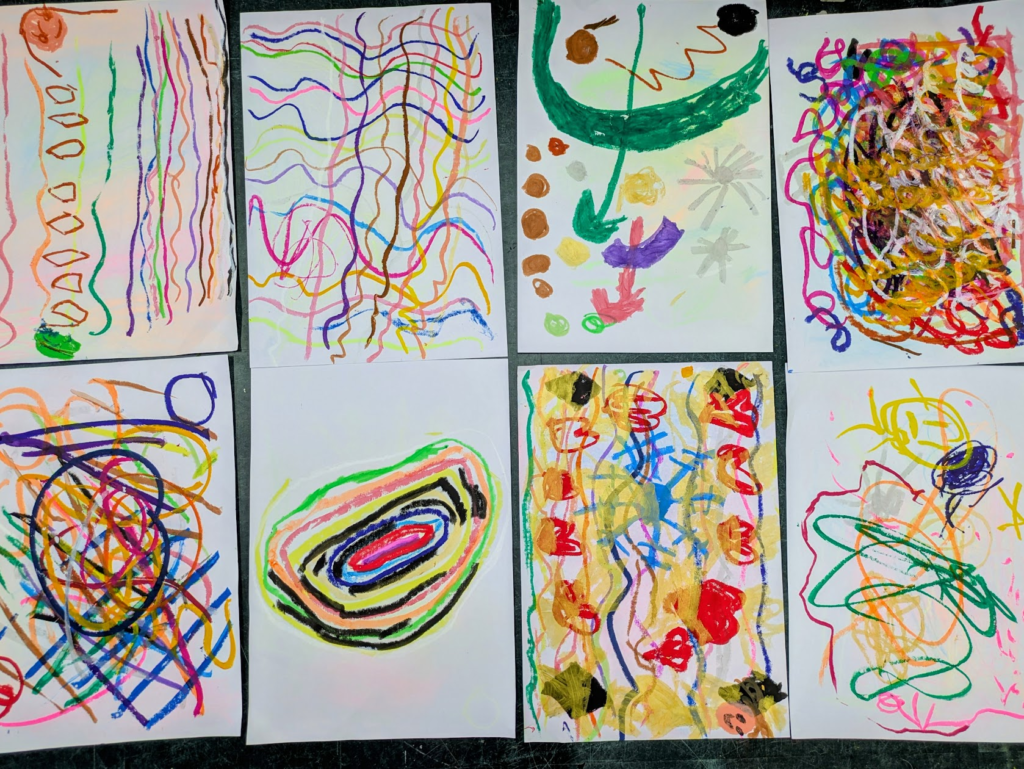
Children’s Learning & Development
Art provides an additional language for thinking and communicating. In the same way that having multiple spoken languages can help us attack things from different perspectives, so can having art and creativity help us to understand or express something that might have been hard with only traditional methods.
Students who may be uninterested in speaking up in class about a topic may spend hours creating something on that same topic. They may not speak up in a classroom discussion, but their art may bely the fact that they took in and are interested in everything that their friends and cohorts were discussing. Thus, using their art to further the discussion can help them be part of the community in a way that they may not have been able to.
How do children communicate ideas through art that they might not yet express in words?
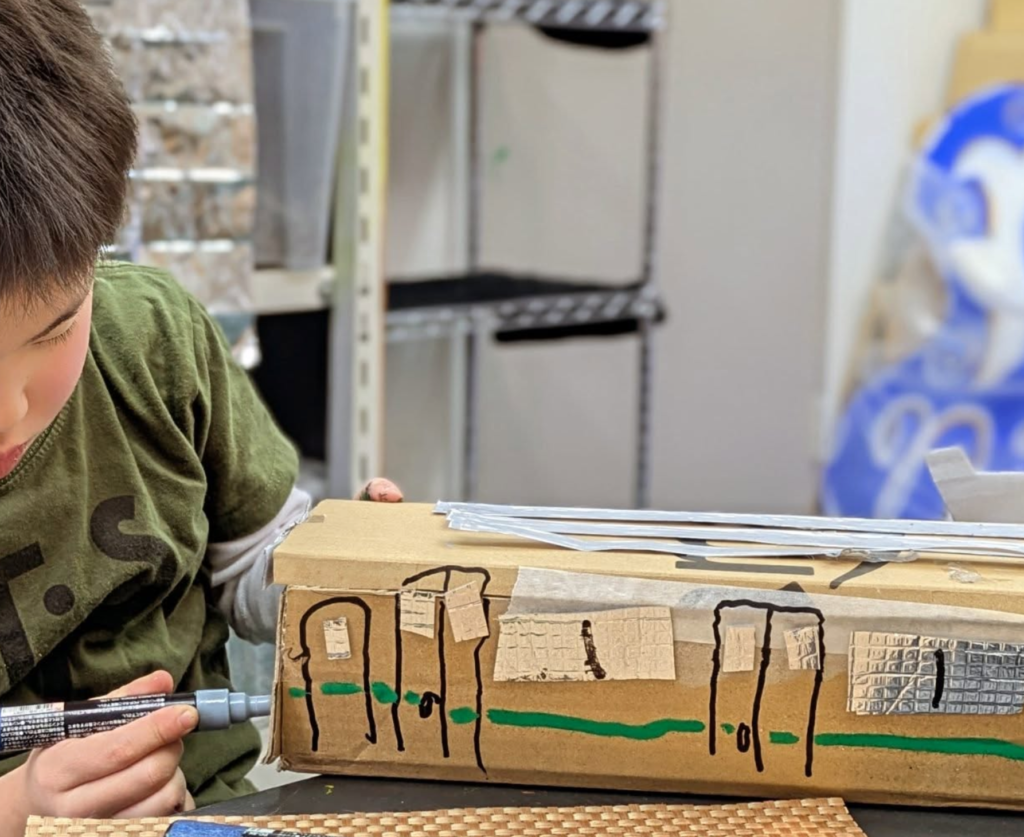
“There is a visible stark difference between children that learn through experimentation and those who learn through imitation. There is no right and wrong way to come to the same developmental spot with art. It’s interesting to witness children thinking in 3D versus those thinking and realizing their ideas in 2D.”
What have children taught you about learning, through your work?
“Learning is not a one size fits all type of thing. It is most definitely not linear, and in most cases needs to go through multiple trials and errors.”
How does working with art support emotional or social development?
“It offers space for connections with other children with similar interests. Individually, art does not require a reason or an answer, it encourages quietly expressing our inner selves in color.”
Reflections, Challenges & Growth
What are some common misconceptions about art in early childhood education?
“That art is secondary. As an artist and an art teacher this goes against most study research. Art should be on the same level as phonics and math. It brings additional dimension to growth.”
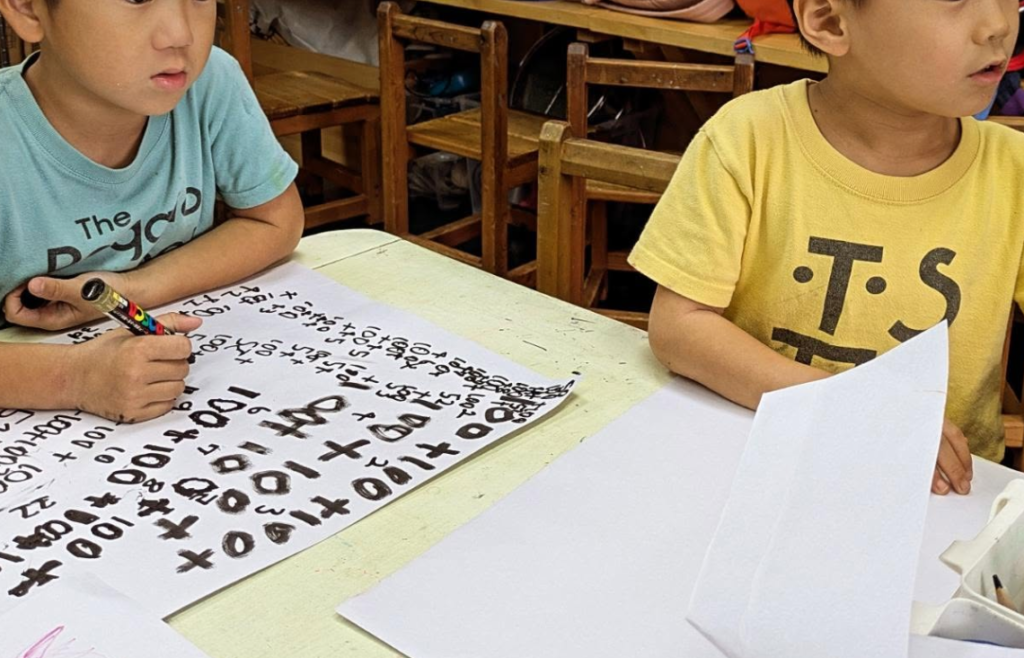
Traditionally “academic” areas like math or phonics find a way to be expressed in the atelier too. Students break down the strict lines of learning which we create when making a specific “phonics” or “math” time that they must follow.
Are there challenges that come with maintaining a Reggio-inspired approach in today’s educational climate?
“A big yes. Children that are being raised with the presence of screens, tend to struggle to create or even think of something from their imagination only.”
What do you hope children carry with them after leaving your atelier?
“A feeling of accomplishment even without a physical result.”
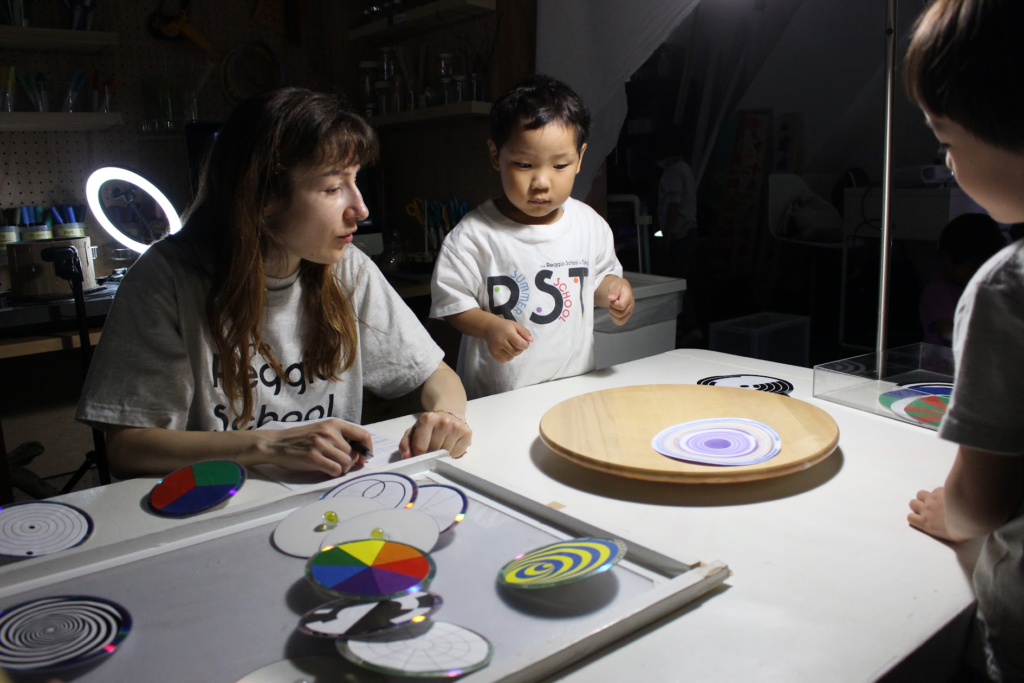
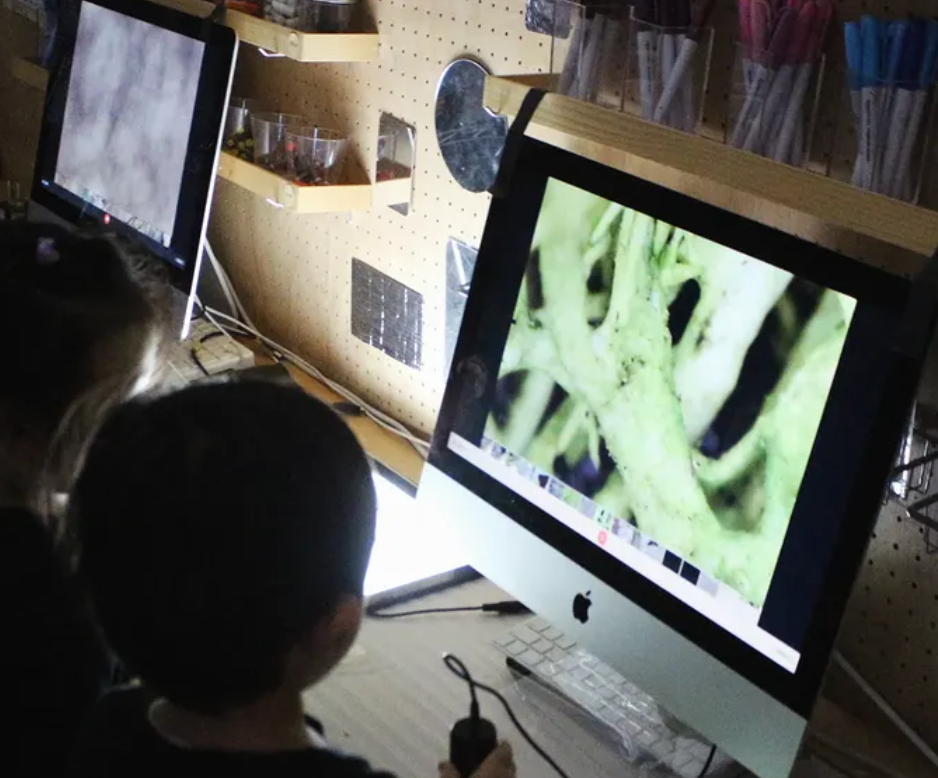
Many times, the atelierista will setup experiences in the atelier that do not have an end result. Instead, the children explore concepts and ideas through action.
If you could change one thing to better how art is valued in schools, what would it be?
“Art does not need to be specific and so closely defined to the point of being separated. Biology, Physics and History for example all use some type of art to bring closer specific theories, events or dissections. I would give an effort into making each subject more approachable through practical art to demonstrate a process or an unreachable concept.”
What does meaningful learning look like to you?
“It looks like play that sparks curiosity.”